
If you are new to sports betting, understanding odds is one of the first skills you need. Odds determine not only the potential payout but also how likely an outcome is according to the bookmaker. Without this knowledge, placing bets can feel confusing or risky.
This guide breaks down the main types of betting odds, explains how to read them, and shows how to use them to make smarter bets.

What Are Betting Odds?
Betting odds represent the probability of an event happening and how much you can win if your bet is successful. They are expressed in three main formats: decimal, fractional, and moneyline (American) odds.
Understanding odds helps you:
-
Estimate the likelihood of an outcome
-
Calculate potential payouts
-
Compare the value across different bets
Decimal Odds
How They Work
Decimal odds are popular in Europe, Australia, and Canada. They show the total return, including your stake, for each unit wagered.
-
Example: Decimal odds of 2.5 for a $10 bet
-
Total payout = 10 × 2.5 = $25
-
Profit = $25 − $10 = $15
-
Advantages for New Bettors
-
Easy to understand and calculate
-
Simple for multiple bets and accumulators
-
Fast to compare across markets
Fractional Odds
How They Work
Fractional odds are common in the UK and show the potential profit relative to your stake.
-
Example: Odds of 5/2 on a $10 bet
-
Profit = 10 × (5 ÷ 2) = $25
-
Total payout = $10 stake + $25 profit = $35
-
Advantages
-
Highlights profit clearly
-
Familiar to traditional bettors and horse racing fans
-
Useful for spotting small differences in odds between markets
Moneyline/American Odds
How They Work
Moneyline odds are widely used in the USA. Positive numbers show the profit on a $100 stake, and negative numbers show how much you must stake to win $100.
-
Example:
-
+150 means a $100 bet wins $150 profit
-
−200 means you must bet $200 to win $100 profit
-
Advantages
-
Common in American sports like basketball, football, and baseball
-
Good for quick assessment of favorites and underdogs
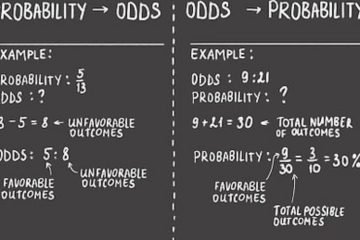
Converting Odds to Probability
Understanding the implied probability behind odds helps you assess value.
-
Decimal Odds: Probability = 1 ÷ Decimal Odds
-
Fractional Odds: Probability = Denominator ÷ (Numerator + Denominator)
-
Moneyline Odds:
-
Positive: Probability = 100 ÷ (Odds + 100)
-
Negative: Probability = −Odds ÷ (−Odds + 100)
-
Example
-
Decimal odds 2.0 → Probability = 1 ÷ 2.0 = 0.5 (50%)
-
Fractional odds 1/1 → Probability = 1 ÷ (1 + 1) = 0.5 (50%)
-
Moneyline +100 → Probability = 100 ÷ (100 + 100) = 0.5 (50%)
Why Understanding Odds Matters
-
Calculates Risk and Reward: Knowing potential payouts helps manage your betting strategy.
-
Compares Value: Spots differences between bookmakers to find the best odds.
-
Informs Decisions: Betting based on odds analysis is more strategic than guessing.
-
Assists Bankroll Management: Helps determine stake size based on expected returns.
Tips for New Bettors
-
Start with Decimal Odds: They are easy to understand and calculate.
-
Learn to Convert Odds: Being able to switch between formats helps when comparing markets.
-
Focus on Value Bets: Look for situations where your probability estimate is higher than implied by the odds.
-
Track Your Bets: Keep a record of odds, stakes, and outcomes to analyze your betting performance.
-
Avoid Emotional Bets: Rely on numbers and probability, not intuition or favoritism.
Common Mistakes to Avoid
-
Betting without understanding odds
-
Confusing fractional and decimal odds
-
Ignoring implied probability and value
-
Chasing bets based on emotions rather than analysis
Conclusion
For new bettors, learning to read betting odds is the foundation of smart wagering. Decimal, fractional, and moneyline odds all communicate the same basic information: how likely an outcome is and how much you can win.
By understanding odds, converting between formats, and analyzing implied probability, new bettors can make informed decisions, spot value, and manage their bankroll effectively. Betting becomes not just about luck but about strategy, giving beginners a stronger chance to enjoy profitable and disciplined wagering.